Little Italy Boston: A Local’s Guide to the North End
Yes, Boston has a Little Italy. It is the North End, the compact, historic neighborhood between downtown Boston and the harbor.
Locals call it the North End, not Little Italy, but both names mean the same place.
People come for handmade pasta, cannoli, espresso, old churches, summer feasts, and three official Freedom Trail sites.
My family came here from Avellino in 1897, so I know the North End as a family neighborhood first and a visitor destination second.
This guide will help you find it, decide what to do, and understand the stories behind the streets.
Little Italy Boston at a glance
- Local name: The North End
- Main street: Hanover Street
- Closest major T stop: Haymarket on the Orange and Green Lines
- Best way to explore: On foot
- Time to allow: Two to four hours, or longer for dinner and an evening walk
- Known for: Italian food, Italian-American traditions, summer feasts, and colonial landmarks
Where Is Little Italy in Boston?
Boston’s Little Italy is the North End, at the northern edge of downtown beside Boston Harbor. Hanover Street is its best-known thoroughfare, Salem Street runs roughly parallel, and the smaller streets between them lead toward North Square and the waterfront.
There is no gate announcing that you have entered Little Italy. Cross the Rose Kennedy Greenway from Haymarket or Faneuil Hall, and the wide downtown blocks quickly give way to close-set brick buildings, narrow streets, cafes, bakeries, and neighborhood shops.
What Do Locals Call Little Italy in Boston?
Locals call it the North End. Visitors may search for Boston’s Italian neighborhood, Italian district, Italian section, or Little Italy, but each phrase points to the same neighborhood.
If you ask a local for the North End, you will sound like you know where you are going. If you ask for Little Italy, the answer will still send you here.
Where Does the North End Start and End?
For a visitor, the Rose Kennedy Greenway forms the clearest downtown edge, while Boston Harbor wraps around the neighborhood to the north and east. The North End is small enough to explore on foot, but its side streets, slopes, historic sites, and food stops reward a slower pace.
How Do You Get to Little Italy?
- By T: Take the Orange or Green Line to Haymarket. From there, cross toward Hanover Street and the North End.
- On foot: Walk from Faneuil Hall, Quincy Market, the waterfront, or downtown. The Freedom Trail also leads directly into the neighborhood.
- By car: Parking is limited and the streets are easier to enjoy on foot. If driving is unavoidable, use a garage near the Greenway and park once.
Modern Little Italy: What to See and Do Today
The best North End visit combines food, history, and time to wander. Start near Hanover Street, leave room for the side streets, and do not make the mistake of treating the neighborhood as a single restaurant stop.
Walk the Freedom Trail
Three of the Freedom Trail’s official sites are in the North End: Paul Revere House, Old North Church, and Copp’s Hill Burying Ground. They are close enough to combine in one walk, with North Square, Hanover Street, and the waterfront along the way.
Paul Revere House dates to about 1680 and is the oldest surviving house in downtown Boston. Old North Church was built in 1723, and two lanterns displayed in its steeple on April 18, 1775, signaled that British troops were taking the water route across the Charles. Copp’s Hill Burying Ground, established in 1660, offers a quieter look at the city’s colonial past and a view toward the harbor.
Visit the North End Historical Museum
The North End Historical Museum opened at 3 Prince Street in 2026. Its exhibits cover four centuries of neighborhood history, including the immigrant communities that shaped the North End. It is a useful first stop if you want context before walking the streets.
Check the North End Historical Museum’s official site for current hours before visiting.
Explore Beyond Hanover Street
Hanover Street is the neighborhood’s spine, but it is not the whole neighborhood. Walk through North Square, follow Prince and Salem Streets, climb toward Copp’s Hill, and continue to the waterfront parks along Commercial Street. The quieter blocks are where the North End begins to feel lived in rather than staged for visitors.
Eat Your Way Through the Neighborhood
The North End has dozens of restaurants, bakeries, cafes, and specialty markets. A good visit might include fresh pasta, a slice of pizza, an espresso, and a cannoli, but the point is not to collect as many stops as possible. It is to notice the families, techniques, and traditions behind the food.
The Mike’s Pastry versus Modern Pastry debate is real, and both have loyal followings. My guide to the best cannoli in the North End explains what makes each style different. If pizza is the priority, start with my North End pizza guide.
If you want the food with the family stories attached, my North End Boston Food Tour runs roughly two to three hours and includes food and drink at six to eight North End stops. My comparison of a self-guided versus guided North End food tour can help you choose the right kind of visit.
Experience a Summer Feast
During the summer, North End religious societies honor patron saints with processions, bands, food stands, and crowded street celebrations. These are living neighborhood traditions, not festivals invented for tourism.
The Fisherman’s Feast began in 1910 with immigrants from Sciacca, Sicily, and is the neighborhood’s oldest continuously running Italian festival. Saint Anthony’s Feast began in 1919 with immigrants from Montefalcione in the province of Avellino and is held over the last Sunday of August. Check the official feast sites for the current year’s schedule before planning around one.
Planning Your Visit to Little Italy Boston MA
The North End is easy to reach and easy to walk, but it is also one of Boston’s busiest visitor neighborhoods. A little timing makes the experience much better.
How Long Should You Spend in Boston’s Little Italy?
Allow two to four hours for a first visit. That is enough time for one or two historic sites, a meal or several tastings, and a walk through the side streets. Add more time if you want to tour the museum, enter every Freedom Trail site, or stay for dinner.
My food tour takes roughly two to three hours, so plan to spend at least half a day in the neighborhood if you want to explore before or after it. If the North End is one stop in a short trip, use this one-day Boston itinerary to place it in the right part of your day.
When Is the Best Time to Visit?
- Summer brings feast season and the biggest crowds. Reserve dinner early on feast weekends.
- Fall offers comfortable walking weather and a calmer pace after the busiest summer weeks.
- Winter and the holidays bring lights, bakery windows filled with seasonal sweets, and quieter streets.
- Spring is ideal for longer walks as cafe doors open and the waterfront becomes more inviting.
Weekday mornings and early afternoons are generally easier for walking and photographs. Friday and Saturday evenings feel livelier but also bring longer waits.
Is the North End Good for Families?
Yes. The neighborhood’s compact size, food stops, parks, and hands-on history make it manageable with children. Strollers can be awkward on narrow or uneven sidewalks, so build in extra time and avoid overloading the itinerary. My guide to visiting the North End with kids has more practical advice.
What Should You Wear and Bring?
Wear comfortable shoes. Most of the experience happens on foot, and some sidewalks are narrow or uneven. Bring a light layer for the waterfront, check attraction hours before leaving, and make restaurant reservations if a specific dinner matters to you.
The Origins of Little Italy in Boston
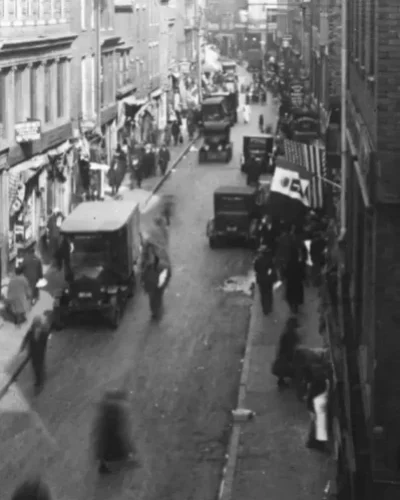
The North End became Boston’s Italian neighborhood during the great migration from Italy in the late nineteenth and early twentieth centuries. Italians began arriving in larger numbers in the 1860s, and many settled in the North End after 1880, following earlier Irish and Jewish communities into the area’s dense housing near the waterfront and city jobs.
My family’s North End story began in 1897, when my relatives arrived from Avellino in Campania. That date matters to me because the neighborhood’s history is not an abstract timeline. It is the story of families arriving, working, raising children, helping new arrivals, and carrying home traditions into a new city.
Immigration Waves That Shaped the Neighborhood
Between 1880 and 1920, about four million Italians immigrated to the United States. By 1920, the North End had about 40,000 residents and was overwhelmingly Italian. Many came from southern Italy and Sicily, including communities from Campania, Abruzzo, Sicily, Lazio, and Liguria.
New arrivals often lived near relatives and people from the same town or region. That pattern helped neighborhood societies, parish life, food traditions, and feast customs take root block by block.
Cultural Influences and Traditions
Italian immigrants brought regional cooking, Catholic devotions, mutual-aid societies, family businesses, and a social life that spilled into streets and shops. The North End’s cafes, markets, processions, and recipes grew from those daily practices.
The neighborhood is more diverse today, but its Italian-American identity remains visible in family businesses, churches, feast societies, and the way food connects one generation to the next.
Key Historical Landmarks in Little Italy Boston
The North End holds two histories at once. Its Italian-American story sits alongside sites from colonial Boston, often on the same street.
The Role of Religious Institutions
Churches gave immigrant families a place to worship, find community, and organize help for new arrivals.
- St. Leonard of Port Maurice Church was established in 1873 and is recognized as the first Italian Catholic church in New England. Its garden offers a peaceful pause just off Hanover Street.
- Sacred Heart Church occupies a building constructed in 1833 as the Seamen’s Bethel. Italian parishioners purchased it in the 1880s, and it became Sacred Heart Church in 1888.
These churches remain closely connected to the neighborhood’s religious societies and feast traditions.
Historic Streets and Buildings
- Hanover Street is the best-known North End street, lined with restaurants, bakeries, cafes, shops, and gathering places.
- North Square is one of Boston’s oldest public spaces and the setting for Paul Revere House and Sacred Heart Church.
- Paul Revere House, built around 1680, is the oldest surviving residence in downtown Boston.
- Old North Church, built in 1723, is Boston’s oldest standing church building and the site of the famous lantern signal before the Battles of Lexington and Concord.
- Copp’s Hill Burying Ground, established in 1660, is Boston’s second-oldest burying ground.
- Commercial Street follows the waterfront near the site of the 1919 Great Molasses Flood. My Great Molasses Flood guide tells that story in more depth.
Few neighborhoods let you move from seventeenth-century buildings to Italian-American churches, food shops, and a working waterfront in a single walk. That overlap is what makes the North End more than a restaurant district.
Evolution Through the Years
The North End has changed substantially since its peak as an Italian immigrant neighborhood, but change did not erase its identity.
Changes in Demographics
Fewer Italian-American families live in the North End than they did in the early and mid-twentieth century. Later generations moved elsewhere, urban projects reshaped the neighborhood, and housing costs rose. At the same time, family businesses, churches, social clubs, and annual feasts kept the Italian-American presence visible.
The removal of the elevated Central Artery and creation of the Rose Kennedy Greenway also reconnected the North End to downtown. For visitors, that change made the neighborhood easier to reach on foot.
Preservation and Living History
Preservation in the North End is not only about old brick buildings. It also means recording family stories, supporting long-running institutions, and keeping public traditions active.
The North End Historical Society and its museum document the communities that shaped the neighborhood. Feast societies continue processions that are more than a century old. Local families keep teaching recipes, trades, and stories that cannot be preserved by architecture alone.
Little Italy Boston FAQ
Is there a Little Italy in Boston?
Yes. Boston’s Little Italy is the North End, the historic waterfront neighborhood just north of downtown. It has been a center of Italian-American life in Boston since the late nineteenth century.
What do they call Little Italy in Boston?
Locals call it the North End. “Little Italy” is a familiar visitor term for the same neighborhood.
Where is Little Italy located in Boston?
Little Italy is in the North End, beside Boston Harbor and across the Rose Kennedy Greenway from downtown. Hanover Street is the main visitor corridor, and Haymarket is the closest major T stop.
Is Boston’s Little Italy walkable?
Yes. The North End is compact and best explored on foot. Wear comfortable shoes because some sidewalks are narrow or uneven.
How much time do you need in Boston’s Little Italy?
Plan on two to four hours for historic sites, food, and a neighborhood walk. Allow half a day or more if you are taking a food tour, visiting the museum, or staying for dinner.
What is Boston’s Little Italy known for?
The North End is known for Italian restaurants, bakeries, cafes, markets, religious feasts, and family-run businesses. It is also home to Paul Revere House, Old North Church, and Copp’s Hill Burying Ground.
Is Little Italy free to visit?
Walking the neighborhood, the Freedom Trail route, parks, and feast streets is free. Museums, historic interiors, guided tours, food, and some events may charge admission.
Can you visit Little Italy without taking a tour?
Yes. This guide is designed to help you explore independently. A guided food tour is useful if you want a structured route, multiple tastings, and the family stories behind the places you see.
Experience Little Italy With a Local
You can explore the North End on your own, and I hope this guide helps you do it well. Follow the Freedom Trail, walk the side streets, try the food, and leave enough time to notice the neighborhood around you.
If you want the version with the family stories, come eat with me. My family has been part of the North End since 1897, and my food tour pairs roughly two to three hours of neighborhood history with food and drink at six to eight North End stops. Tours meet at the Tony DeMarco statue at Hanover and Cross Streets.
Book a tour now and experience the
North End the way locals do.
“I know a guy!“
NORTH END BOSTON FOOD TOUR
Solo, Privates, Couples,
Groups, and Corporate tours.
617-719-9542
Meeting Location:
Tony DeMarco Statue,
191 Hanover St, Boston, MA 02113
Get the latest bites and insider tips. Sign up for our newsletter!
North End Boston Food Tours © 2025, All rights reserved.